The Universal Reusable Bag Problem
You know the smell — that musty odor trapped in your mesh produce bags or insulated grocery totes. That damp, musty, slightly sour odor that hits you when you open a reusable bag that’s been sitting in your car or closet for a few days. It’s one of the most common complaints about reusable bags — and the #1 reason people stop using them.
The good news: that smell is fixable. And with the right habits, it’s entirely preventable. Here’s exactly what causes it and how to get rid of it for good.
What Causes That Mildew Smell?
Reusable bags smell because of microbial growth — specifically mold and bacteria. Here’s the chain of events:
- Your bag picks up moisture from produce condensation, meat juices, wet umbrellas, or rain
- The moisture gets trapped in the fibers of the fabric when you fold and store the bag
- Warm, dark, humid conditions (like a car trunk or closet) create the perfect environment for mold and bacteria to multiply
- The microbes produce volatile organic compounds (VOCs) — that’s the smell
Non-woven PP and RPET bags are especially prone because their synthetic fibers trap moisture against the fabric surface. Cotton bags absorb moisture into the fibers but dry faster if properly aired.
Method 1: The Baking Soda Deodorizer (All Materials)
Best for: Light odors, routine maintenance
- Sprinkle baking soda generously inside the bag
- Let it sit for 12–24 hours (overnight is perfect)
- Shake out or vacuum the baking soda
- Air dry in direct sunlight — UV light is a natural disinfectant
Why it works: Baking soda is a mild alkali that neutralizes acidic odor compounds. Sunlight’s UV rays kill mold spores. Together, they’re the most effective natural deodorizer combo.
Method 2: White Vinegar Soak (Cotton & Canvas Only)
Best for: Strong mildew smells, cotton and canvas bags
⚠️ Do NOT use on RPET, non-woven PP, or coated bags — vinegar can degrade synthetic fibers.
- Mix 1 part white vinegar to 3 parts warm water
- Submerge the bag and soak for 30–60 minutes
- Wash with regular detergent in the washing machine
- Air dry in sunlight
Why it works: Vinegar’s acetic acid kills mold and bacteria. It also breaks down the alkaline compounds that cause musty odors.
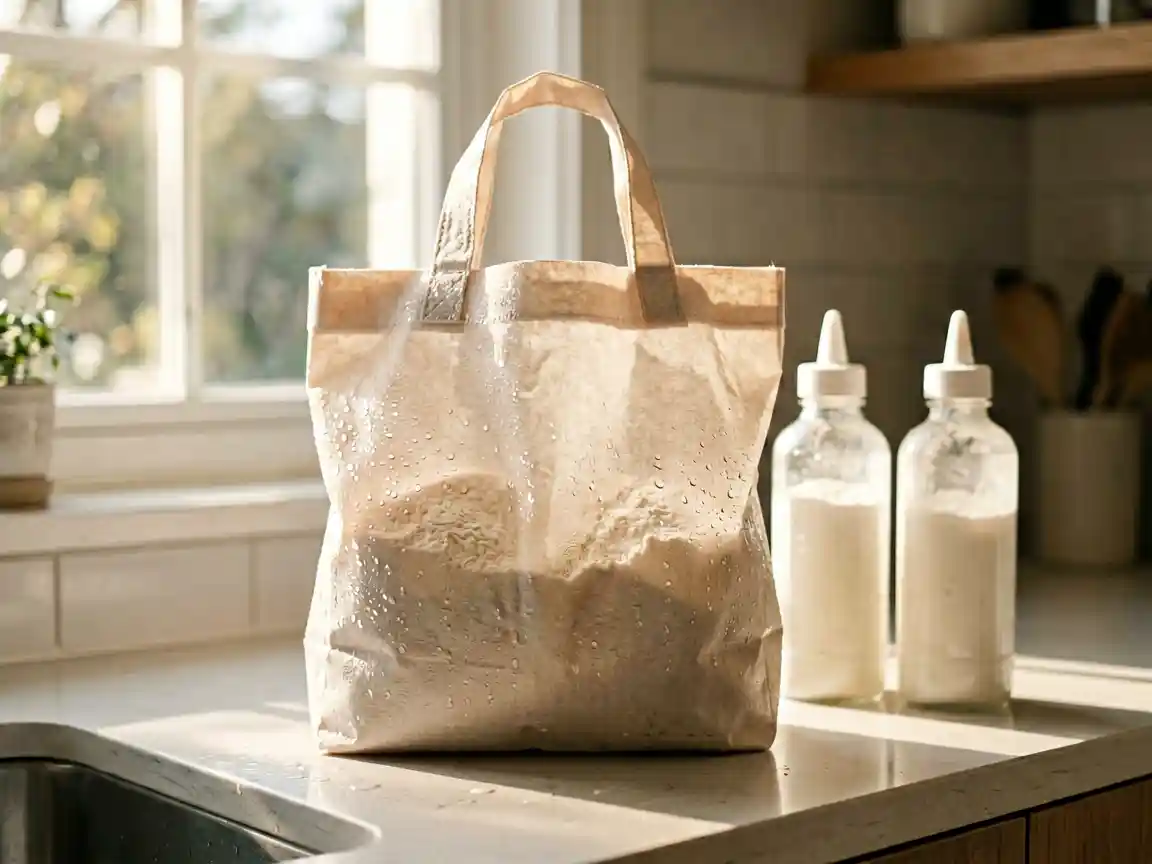
Method 3: The Laundry Soda Wash (RPET & Synthetic Bags)
Best for: RPET, non-woven PP, and synthetic blend bags
- Add ½ cup washing soda (sodium carbonate) to your regular detergent
- Add ½ cup white vinegar to the rinse cycle (acts as a natural fabric softener that also kills odors)
- Wash on warm (not hot — heat can warp synthetic fibers)
- Air dry only — do not machine dry RPET or non-woven bags
💡 Pro tip: Use a microfiber capture bag (Guppyfriend or similar) when washing synthetic bags — it catches microplastic fibers and prevents them from entering the water system.
Method 4: Hydrogen Peroxide Spray (Quick Fix)
Best for: Spot treatment, all materials
- Mix 3% hydrogen peroxide with equal parts water in a spray bottle
- Spray the affected areas until slightly damp
- Let sit for 15 minutes (hydrogen peroxide breaks down into water and oxygen)
- Wipe with a clean cloth and air dry
Why it works: Hydrogen peroxide is an effective disinfectant that kills mold spores on contact. It breaks down into harmless water and oxygen, so there’s no chemical residue.
⚠️ Test on a small area first — hydrogen peroxide can bleach some colored fabrics.
Method 5: The Deep Clean (Worst-Case Scenario)
Best for: Extreme mildew, bags that have been wet for days
- Fill a bucket with warm water and add oxygen bleach (OxiClean or similar) — never chlorine bleach
- Soak for 4–6 hours
- Machine wash with hot water + detergent
- Add ½ cup vinegar to the rinse cycle
- Dry in direct sunlight for at least 4 hours
Note: If the bag still smells after a deep clean, the mold may have penetrated the fibers permanently. In that case, it’s time to replace the bag — and recycle the old one if possible.
Prevention: How to Keep Bags Smelling Fresh
| Habit | Why It Works |
|---|---|
| Air bags out immediately after each use | Prevents moisture from getting trapped |
| Store bags open, not folded (or loosely folded) | Air circulation prevents mold growth |
| Keep a bag hook by the door instead of in a drawer | Visible storage means air flow + you won’t forget them |
| Wash every 2–3 weeks (or after carrying raw meat) | Removes bacteria before they multiply |
| Use separate bags for meat and produce | Prevents cross-contamination and odor transfer |
| Throw in a dryer sheet between uses (cotton bags only) | Absorbs moisture and adds fresh scent |
When to Just Replace a Bag
Sometimes, no amount of cleaning can fix a bag that’s been neglected too long. Replace it if:
- It still smells after 2 deep-cleaning attempts
- You see black or green mold spots that won’t wash out
- The bag feels greasy or slimy even after washing
- Non-woven PP bags start delaminating (layers separating)
When you do replace, choose a bag made from RPET or organic cotton — both are washable, durable, and more resistant to odor buildup than non-woven PP. Check out our heavy-duty RPET grocery bag set or our insulated thermal grocery tote for keeping cold items cool on the go. Related: recycling worn bags and how to wash reusable bags to extend life. how to recycle worn bags and building bag-remembering habits.