The #1 Barrier to Zero-Waste Shopping
Surveys consistently show that forgetting to bring their foldable reusable totes or heavy-duty grocery bag sets reusable bags is the biggest obstacle to reducing plastic bag use — bigger than cost, bigger than convenience, bigger than habit. Even committed environmentalists forget their bags sometimes.
The problem isn’t willpower — it’s system design. Your brain is wired to follow routines, and if “bring bags” isn’t part of your shopping routine, you’ll forget. Here are 7 proven strategies to make bag-remembering automatic.
Habit 1: Keep Bags in Your Car (Always)
The simplest, most effective solution. Designate a specific spot in your car — the passenger seat footwell, the trunk organizer, or a hook on the back of a seat. Never remove all the bags from your car. If you bring them inside to wash or restock, put them back before you close the car door.
Why it works: Your car is the one thing you always have when shopping. By making your car the permanent bag storage location, you remove the “remember to pack them” step entirely.
Habit 2: Use a Bag Hook by Your Door
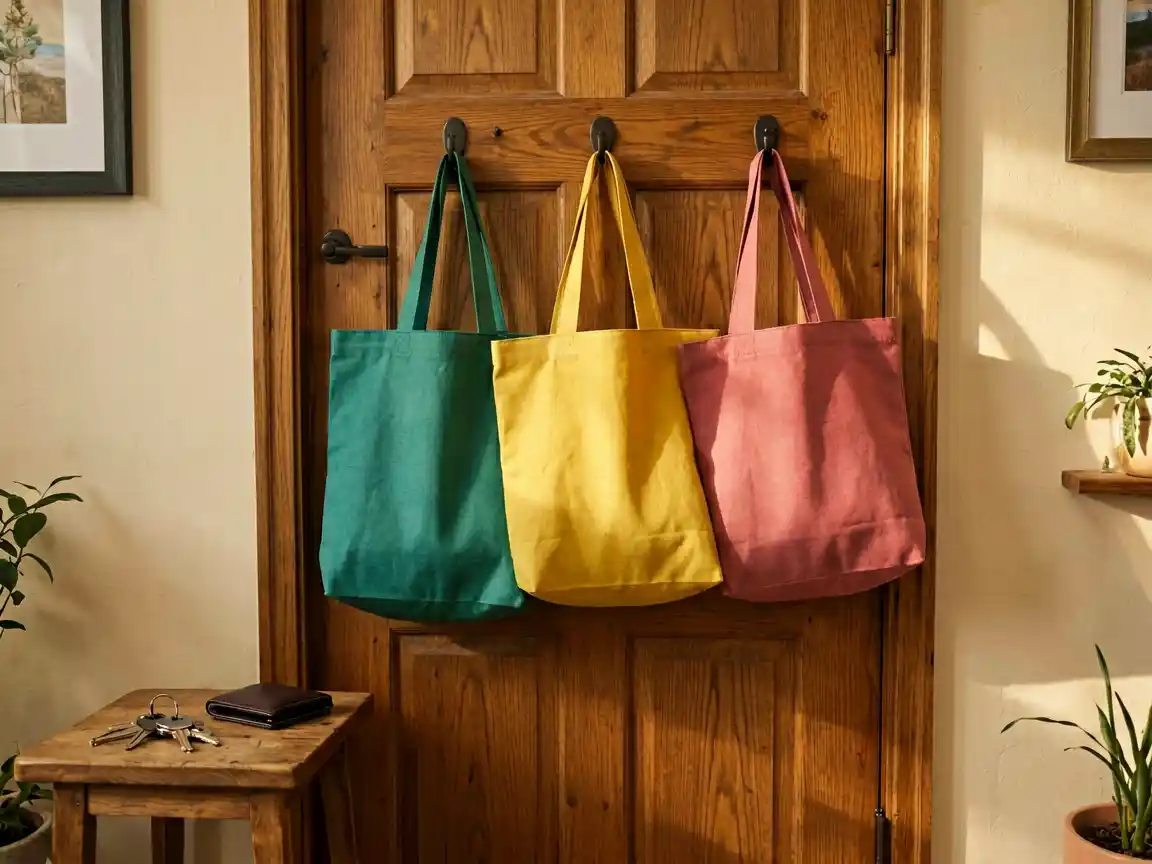
Install a sturdy hook or peg near your front door or garage entry — the door you use when leaving the house. Hang your reusable bags there. Your keys, wallet, and phone probably already live near this door. Add bags to the group.
Why it works: This is “habit stacking” — attaching a new habit to an existing one. Every time you grab your keys, you see the bags. The visual cue triggers the memory.
Habit 3: Keep a “Pocket Bag” for Spontaneous Shopping
Get a foldable shopping bag that packs into a small pouch — small enough to fit in your everyday bag, backpack, or coat pocket. Keep it there permanently. You’ll never be caught without a bag when you stop at a store unexpectedly.
Why it works: This eliminates the need to “remember” anything. It’s always there, like your wallet or phone. Foldable RPET bags are ideal — they weigh almost nothing and pack to the size of a tennis ball.
Habit 4: Make a Shopping “Pre-Flight” Checklist
Before leaving the house for a shopping trip, run through a quick mental checklist: Phone? Wallet? Keys? Bags? Say it out loud. or make it a physical checklist stuck to your door.
Why it works: Verbal repetition creates a stronger memory trace. When “bags” becomes part of your automatic pre-departure routine, you’ll stop forgetting.
Habit 5: Store Bags Inside a Bag You Always Carry
Keep a reusable bag inside your work backpack, gym bag, or everyday purse. It takes up minimal space and is always accessible. This is especially useful for people who don’t drive.
Why it works: This leverages the “always carried” nature of your primary bag. You don’t need to remember a separate item — it’s nested inside something you already remember.
Habit 6: Create a Post-Shopping Return Routine
After you unpack your groceries, immediately fold the reusable bags and put them back in your car or by your door. Don’t leave them in the kitchen or laundry room — they won’t find their way back on their own.
Pro tip: Keep the bags in the trunk of your car permanently. Use a small trunk organizer or a dedicated tote just for bag storage. Then when you wash them, immediately dry and return them to the trunk.
Habit 7: Buy Enough Bags to Make Forgetting Impossible
Most people have 3–5 reusable bags. That’s enough for one trip, but not enough for convenient placement. Buy 10–15 bags and strategically distribute them:
- 2 in the car (trunk)
- 2 in the car (passenger seat, as backup)
- 2 in your everyday bag/backpack
- 2 by the front door
- 2 by the back door (for farmers market trips)
- 5 in the kitchen for packing
Why it works: When bags are everywhere you might need them, remembering becomes irrelevant. They’re always within reach.
The 30-Day Bag Challenge
Try this: for the next 30 days, implement at least 3 of these habits. Track how many times you remember vs. forget. Most people find that after 2 weeks, bag-remembering becomes automatic — no conscious effort required.
And if you still forget? Don’t beat yourself up. Carry a foldable backup bag in your pocket (see Habit 3) and you’ll never be forced to take a plastic bag again. Find packable reusable bags here — and for more habit tips, read about fixing mildew smells and the best travel bags. →