Every Reusable Bag Eventually Wears Out
Even the most durable reusable bag — whether RPET recycled bags or compostable PLA produce bags has a finite lifespan. Whether it’s frayed handles on a canvas tote, a hole in the bottom of an RPET grocery bag, or delamination in a non-woven PP bag — eventually, every bag needs to be replaced.
But where should it go? Can you throw it in the recycling bin? Does it need special handling? The answer depends on what the bag is made of. Here’s a comprehensive end-of-life guide for every reusable bag material.
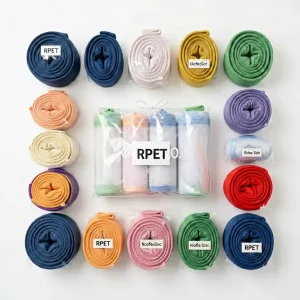
RPET (Recycled Polyester) Bags — ♻️ Recyclable (Specialized)
Recyclable: Yes, but not in most curbside bins. RPET is made from recycled PET plastic (#1). While PET is widely recyclable in bottle form, RPET fabric often isn’t accepted by standard municipal recycling programs because the fibers are blended and sometimes woven with other materials.
How to recycle RPET bags:
- Check with textile recycling programs in your area — many accept fabric items
- Use brand-specific take-back programs (some bag manufacturers offer recycling)
- Send to specialized fabric recyclers like TerraCycle or The Renewal Workshop
- Do NOT put in curbside recycling — it can contaminate the PET bottle stream
Alternative: Upcycle — RPET fabric is very durable. Repurpose as a storage bag, stuff sack, or plant pot cover.
Non-Woven PP Bags — ♻️ Recyclable (PP #5, But Rare)
Recyclable: Technically yes — polypropylene (PP #5) is recyclable. But non-woven PP bags are rarely accepted in curbside programs because they’re lightweight, can tangle in sorting equipment, and are often contaminated with food residue.
How to recycle non-woven PP bags:
- Check if your local recycling accepts plastic film/bags — some grocery store drop-off programs accept PP bags
- Look for #5 PP recycling in your area (less common than #1 or #2)
- Use TerraCycle’s zero-waste boxes for hard-to-recycle plastics
Best option: Reuse them as long as possible. Non-woven PP has the highest environmental cost-to-benefit ratio — using it for even 50 trips makes it better than single-use plastic.
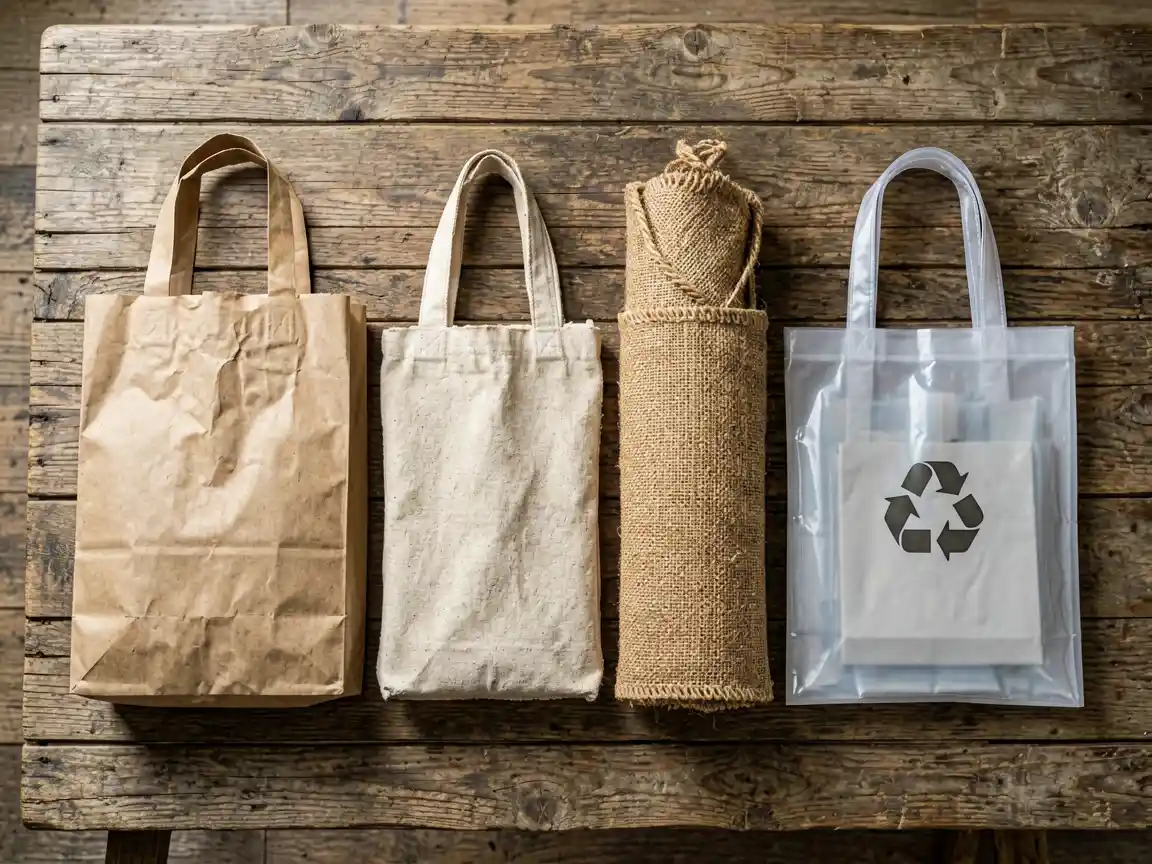
Cotton & Canvas Bags — 🌱 Compostable (If 100% Natural)
Recyclable: Not in traditional textile recycling (cotton fibers are too short after use). But compostable!
How to compost cotton bags:
- Remove any non-cotton components — metal rivets, zippers, synthetic stitching, printed labels
- Cut or shred the fabric into smaller pieces
- Add to your compost bin as brown/carbon material
- In a hot compost pile (130–160°F), 100% cotton breaks down in 3–6 months
- In a cold compost bin, expect 6–12 months
Note: Only compost 100% cotton bags. Bags with synthetic linings, polyester stitching, or plastic coatings will not fully decompose and should be disposed of differently.
Alternative: Repurpose — Old cotton totes make excellent cleaning rags, plant pot liners, or gift wrap.
Organic Cotton Bags — 🌱✅ Best Compost Option
Recyclable: Like conventional cotton, organic cotton bags are best composted rather than recycled. The absence of pesticides and chemical treatments makes organic cotton especially suitable for composting.
How to compost organic cotton bags: Same process as conventional cotton. The compost will be cleaner (no pesticide residues), making it better for vegetable gardens.
Jute & Hemp Bags — 🌱✅ Fully Compostable (Easiest)
Recyclable: Not typically. But 100% compostable — and faster than cotton.
How to compost jute/hemp bags:
- Cut into pieces
- Add to compost bin as brown material
- Jute breaks down in 1–3 months in a hot compost
- Hemp breaks down in 1–2 months
Note: Jute sheds fibers during decomposition — this is normal. Both jute and hemp are carbon-negative crops, meaning their growth absorbs more CO₂ than processing emits.
Kraft Paper Bags — ♻️✅ Widely Recyclable & Compostable
Recyclable: Yes! Kraft paper is widely accepted in curbside paper recycling. Remove any plastic windows, handles, or tape first.
Compostable: Also yes. Shredded kraft paper makes excellent brown material for compost bins.
How to recycle: Flatten and place in paper/cardboard recycling bin. Ensure it’s dry and free of food contamination.
Quick Reference Table
| Material | Curbside Recyclable? | Compostable? | Special Instructions |
|---|---|---|---|
| RPET (recycled polyester) | ❌ No | ❌ No | Textile recycler or TerraCycle |
| Non-woven PP | ⚠️ Rarely | ❌ No | PP #5 drop-off if available |
| Conventional cotton | ❌ No | ✅ Yes (3-6 mo) | Remove hardware first |
| Organic cotton | ❌ No | ✅ Yes (3-6 mo) | Cleanest compost option |
| Canvas | ❌ No | ✅ Yes (4-8 mo) | Thicker = slower to decompose |
| Jute | ❌ No | ✅ Yes (1-3 mo) | Fastest natural decomposition |
| Hemp | ❌ No | ✅ Yes (1-2 mo) | Fastest overall |
| Kraft paper | ✅ Yes | ✅ Yes | Most versatile end-of-life |
A Final Word: Reuse First, Recycle Last
The most environmentally friendly option is always keeping your bag in use. Before you recycle or compost a bag, ask yourself:
- Can it be repaired? Frayed handles can be re-stitched. Small holes can be patched.
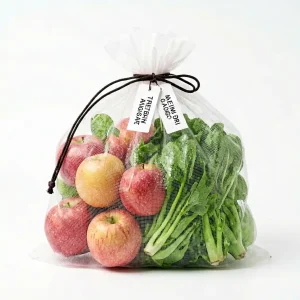
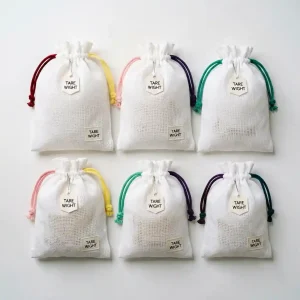
- Can it be repurposed? A worn grocery bag becomes a great storage bag, produce bag, or packing material.
- Can someone else use it? Donate bags in good condition to thrift stores, shelters, or community organizations.
When a bag truly reaches end of life, choose the most sustainable disposal method for its material. And when you buy a replacement, choose a material whose end-of-life you’re comfortable with. Compare bag materials → | Shop compostable PLA produce bags — and for the bigger picture, read are reusable bags bad for the environment? and our material comparison guide. →
To keep bags in rotation longer, read how to wash reusable bags and paper vs reusable vs compostable.