From Cost Item to Brand Asset: The 2026 Mindset Shift
For most of the 2010s, reusable bag brand marketing lived inside the packaging budget. Procurement bought the cheapest printed tote that would survive a trade-show weekend, handed it to a visitor, and quietly wrote it off as a sunk cost. That framing is obsolete. In 2026, the sharpest brand and merchandising teams treat a custom tote bag as media — a piece of paid advertising that keeps running every single time a customer walks out of a store, through a parking lot, or past a gym mirror.
This is the central question that should drive every 2026 buying decision: not “how much does this bag cost me,” but “how many times will this bag be seen by people who are not yet my customers?” The difference between these two questions is the difference between writing off a promotional expense and building a durable brand asset. When you understand custom tote bag ROI in terms of impressions per dollar, the economics flip in favor of buying fewer, better bags — and paying more for the ones that actually get used.
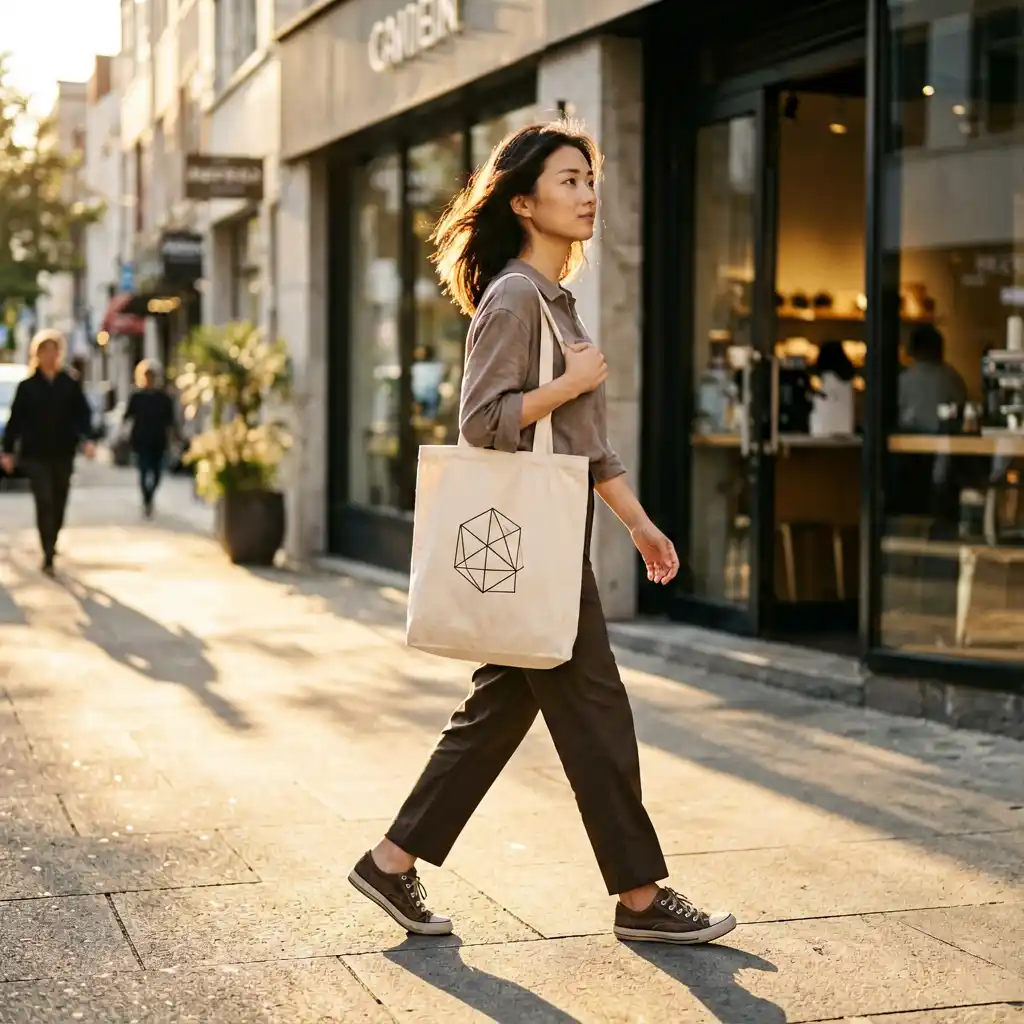
Consider the raw math. A single tote that a shopper carries twice a week, fifty weeks a year, generates over a hundred out-of-home exposures annually — in grocery aisles, on commutes, in university cafeterias. Multiply that by several thousand distributed bags and you are effectively fielding a mobile billboard network with no lease, no energy cost, and no expiry date. That is why 2026 buyers are willing to pay a premium: they have stopped pricing the bag and started pricing the exposure it earns.
Usage Rate Is the Real Metric — Exposure Value Follows
Here is the uncomfortable truth most suppliers will not tell you: a bag is only an asset if it gets used. A plastic-feel give-away that ends up in a kitchen drawer or a landfill contributes nothing to your brand — it contributes to the waste crisis. The entire value chain of reusable bag brand marketing collapses if your audience never carries the bag again. Usage rate is therefore the master metric, and everything else — cost per impression, lifetime value, sustainability story — is downstream of it.
When you re-derive the economics through a usage lens, “expensive” bags become the cheapest option. A premium cotton tote that a customer uses 200 times costs a tiny fraction of a cent per impression. A cheap bag used twice costs several dollars per impression. The same logic applies at scale. Market research continues to track the reusable bag market’s steady expansion — Grand View Research projects the global reusable bags market to grow at a compound annual growth rate of roughly 5–6% through 2030, driven largely by plastic bag bans and consumer preference for durable, branded carriers. That growth is a tailwind for any brand that positions its bag as a daily-use item rather than a one-time giveaway.
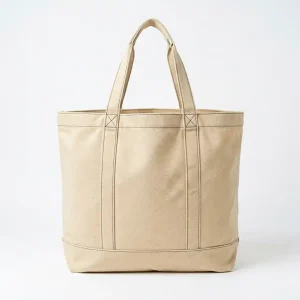
For procurement teams, this reframes the specification conversation. Instead of asking “what is the cheapest printed bag,” the winning question is “what design and material combination will people actually carry?” That is where our custom logo cotton tote bags wholesale line comes in — cotton’s natural feel and printability make it the most-carried option in retail and lifestyle contexts, which is exactly why it dominates the high-usage tier of the market.
Industry Cases: Where Reusable Bags Earn Their Keep
Usage-driven reusable bag brand marketing is not theoretical — it is playing out across four categories where bags are carried repeatedly and seen by many.
Coffee Shops & Cafés
Coffee culture is the single best use case for a reusable carrier. Customers visit daily, and a branded bag rides along on commutes, dog walks, and weekend errands. A café that gifts a sturdy tote at checkout turns every regular into a walking ambassador. The bag’s job is not just to hold a croissant — it is to appear on the train platform at 8 a.m. where three hundred strangers see the logo. This is why premium cafés choose a heavier, structured bag that survives years, and why our heavy utility cotton tote with pockets is a frequent choice — the pockets and reinforced base make it a genuine everyday carry, not a novelty.
Gyms & Fitness Studios
Gym-goers are a high-frequency, high-visibility audience. A branded drawstring or duffel-style bag travels to and from the gym several times a week and sits visibly on locker-room benches, car seats, and studio floors. For fitness brands, the bag is simultaneously merchandise, membership perk, and free advertising. Because the audience is young and style-conscious, the bag must look good enough to want — a cheap, thin bag gets abandoned in a locker. Our custom logo drawstring promotional bags are popular here because they are lightweight to carry and easy to stuff into a gym bag when not in use, keeping the logo in circulation without adding bulk.
Beauty & Cosmetics
Beauty brands distribute bags as order packaging, samples carriers, and in-store purchase incentives. The audience skews toward sharing — unboxings, “what’s in my bag” content, and social posts. A thoughtfully designed tote gets photographed and appears on Instagram and TikTok feeds, extending reach far beyond the person carrying it. The stripe cotton canvas beach tote is a favorite in this segment because its aesthetic design makes it a fashion accessory people want to show off, generating organic social exposure that paid media cannot buy.
Supermarkets & Grocery Chains
Grocery is the highest-frequency bag use case in existence — shoppers carry bags multiple times per week, year-round, in full view of other shoppers. Grocery chains that sell or gift reusable bags effectively turn every shopper into a roaming billboard inside their own stores and rival stores alike. The durable, high-capacity cotton carrier is the workhorse here, and the math favors quality: a bag sturdy enough to haul a week of groceries is the one that gets carried a thousand times.
“A reusable bag is the only ad you ever buy that your customer carries for you, for free, for years — if you make it good enough to want to carry.”
How Design Lifts Carry-Through (and Why You Should Pay for It)
If usage rate is the goal, design is the lever. The difference between a bag that gets used twice and a bag that gets used two hundred times is rarely the logo — it is how the bag feels, functions, and looks. Here is what moves the needle on custom tote bag ROI through design:
- Material weight and hand-feel. A thicker cotton or canvas construction feels premium and reads as “keep me.” Thin, plasticky material reads as disposable before the customer even walks away.
- Structure and function. Reinforced handles, a flat base, interior or exterior pockets, and a gusset that holds volume turn a gift bag into an everyday tool. Function is what gets a bag packed and re-packed.
- Aesthetic restraint. Subtle, tasteful branding outperforms a loud logo wall. A bag people are proud to carry is a bag people carry — restraint drives repeat use and organic social sharing.
- Print quality and durability. A logo that fades after a few washes kills the asset. High-quality printing that survives laundering keeps the ad running for the bag’s full life.
These are not discretionary luxuries — they are the features that convert a one-time distribution cost into a long-running brand asset. When you compare the small per-unit premium of a better bag against the hundreds of extra impressions it earns, the better bag wins on cost-per-impression almost every time. A ten-cent increase in unit cost that doubles the bag’s usable life effectively halves the cost of every impression that bag will ever deliver — the cheapest possible marketing is the one that keeps showing up.
There is also a compounding effect worth planning for. A bag carried by a customer in a visible setting is seen not only by passers-by but often photographed and shared online. Each share multiplies the exposure at zero marginal cost, and because the bag is branded with your logo, the association travels with the image. This is why aesthetics matter commercially rather than cosmetically: the better the bag looks on camera, the more earned reach it generates, and the more your reusable bag brand marketing behaves like a small, always-on media buy rather than a one-off handout.
Measuring the ROI of Your Bag Program
To defend a bigger budget, brand teams need numbers. Custom tote bag ROI is measurable with the same tools you already use for paid media — you just have to build the tracking from day one. The indicators that matter:
| Metric | What It Tells You | How to Capture It |
|---|---|---|
| Distribution cost per unit | Up-front spend per bag | Invoice / landed cost data |
| Estimated impressions per bag | Projected exposures over the bag’s life | Carry frequency survey × months in use |
| Cost per impression (CPM equivalent) | Efficiency of the bag as media | Distribution cost ÷ total impressions × 1000 |
| Reuse rate / carry-through | Whether the bag is actually being used | Customer survey, loyalty scans, social hashtags |
| Social & UGC reach | Earned exposure beyond the carrier | Branded hashtag tracking, tagged posts |
| Reduced single-use cost | Savings on disposable packaging | Compare spend before vs. after the program |
A simple working benchmark: a well-designed cotton tote carried once a week for two years generates roughly 100+ in-person impressions for a modest one-off cost. On a per-impression basis that routinely beats local OOH and can approach the efficiency of digital retargeting — with the added benefits of tangibility, durability, and a positive sustainability association that no screen ad can match.
Reallocating Budget: Buy Fewer, Better Bags
The practical recommendation for 2026 is a shift in how you spend, not how much. Reallocate promotional budget toward a smaller volume of higher-quality carriers that people will actually use, and measure the results against your previous give-away strategy. Concretely:
- Raise the per-unit spec. Spend the savings from buying fewer units on heavier cotton, reinforced stitching, and durable printing. The bag’s usable life — and its total impressions — rise faster than the cost.
- Design for pride of use. Treat the bag as a product your audience would buy, not a handout they tolerate. Restraint and function win over logo size.
- Distribute to high-frequency moments. Give bags where they will be carried repeatedly — at checkout, membership sign-up, and purchase, not only at one-off events.
- Layer the sustainability story. A durable, reused bag is your most credible environmental message, because it is visibly true every time it appears in public.
- Track, then iterate. Set the metrics above, review them quarterly, and feed the data back into the next spec decision.
For a deep dive into the buying process — materials, print methods, minimums, and how to spec for actual carry-through — see our complete custom reusable bags with logo buyer’s guide. And if your program includes employee gifts, corporate swag, or event kits, the drawstring and tote guide for corporate gifts and employee swag walks through how to choose carriers your team will actually use.
Ready to Turn a Bag into a Brand Asset?
The 2026 opportunity is not about spending more on bags — it is about spending smarter so that every dollar returns years of free, in-person brand exposure. If you are ready to spec a custom bag that people will actually carry, browse our full product range or contact our team for a no-obligation quote and print guidance. We’ll help you engineer a carrier that stops being packaging and starts being your most-used piece of marketing.
Pair the program with a BYOB fee playbook and wine totes as gifts for premium tiers. For apparel retail, our boutique bag guide shows the playbook.