Across the United States, plastic bag fee retail policies are tightening in 2026. More states and municipalities are shifting from voluntary recycling campaigns to mandatory per-bag charges, and grocery chains, convenience stores, and quick-service restaurants are all being pulled into compliance. The operational question for merchants is no longer whether to charge — it is how to charge without eroding goodwill. The most effective answer is a well-designed bring your own bag program that pairs a clear fee structure with incentives that keep regulars happy. This playbook walks through the policy landscape, pricing strategy, incentive design, checkout scripting, complaint handling, and the real numbers that show why a smooth transition protects both margins and repeat visits.
2026 Bag Fee Policy Landscape: What Retailers Are Up Against
The momentum behind single-use plastic bans has become national. Washington State, for example, has moved from its earlier ban toward a mandatory 12¢ per-bag fee on recyclable paper and reusable bags, with the charge visible on every receipt (source: Washington State Department of Ecology bag-fee rule). Colorado has enforced a 10¢ bag fee since January 1, 2023, under SB21-020 (source: Colorado Department of Public Health & Environment), and a growing list of counties and cities — from New Jersey’s statewide ban to municipal ordinances in California, Hawaii, and Oregon — now require retailers to charge for or refuse single-use bags. In many of these markets the plastic bag fee retail landscape now spans the full price range, from a few cents in low-fee counties to a dollar or more in high-cost cities, which means a single nationwide policy simply does not exist. Your team must check the exact ordinance for every store address you operate.
What this means operationally:
- Compliance is no longer optional. Failing to charge the mandated fee can result in fines and audit penalties, so the point-of-sale system must capture the fee reliably.
- The fee is a line-item, not a surcharge you can absorb. In most jurisdictions the merchant keeps the fee, but it must be disclosed and itemized on the receipt.
- Customer expectations have shifted. Shoppers increasingly anticipate a bag fee at the register, which makes a clear, friendly bring your own bag program the single strongest de-escalation tool a retailer has.
- Paper is not a free loophole. In most fee states, recyclable paper bags carry the same mandated charge as reusable options, so swapping plastic for paper does not remove the line item — it only changes which fee you print.
For a deeper look at the regulatory timeline and which states have already acted, see our breakdown of plastic bag bans across the US in 2026 and our guide to the best alternatives to switch to when a ban hits.

Plastic Bag Fee Retail Pricing: Set the Fee, Position the Value
How you price the bag — and how you frame that price — determines whether customers feel taxed or treated fairly. The price itself is often set by law, but you control the perception of it.
Charge the legislated minimum, then add value, not cost
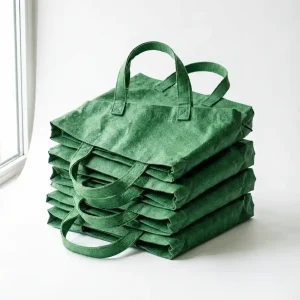
When the law sets a floor (such as Washington’s 12¢ or Colorado’s 10¢), charge exactly the mandated amount. Do not round up or add a handling surcharge — customers compare your fee against the legal minimum, and any gap reads as profiteering. Instead, differentiate on the quality of the bag you offer at the counter. A sturdier jumbo reusable grocery tote rated for 60 lb feels like a legitimate purchase, not a penalty fee.
Anchor the fee with a visible comparison
Post a small shelf sign at the register: “Plastic bag fee 12¢ — or bring your own bag and pay nothing.” When the fee is small relative to the basket, it is psychologically absorbable; when it is framed next to a free option, it nudges behavior without coercion. This is the core psychology behind a successful bring your own bag program.
Keep pricing consistent across every register
Inconsistent fees between checkout lanes are a top source of complaints. Program the fee into the POS as an automatic line item so cashiers never have to remember state-by-state rules, and audit receipts monthly to confirm the fee renders on every eligible transaction.
Bring Your Own Bag Program Incentives: Rewarding Instead of Penalizing
The fastest way to reduce checkout friction is to stop punishing the wrong behavior and start rewarding the right one. Incentive programs convert the bring your own bag program from a cost-saving mandate into a loyalty driver.
Per-bag credits and cents-off
Give customers 5–10¢ back for every reusable bag they bring. Whole Foods has long offered a small per-bag credit at the register, and independent grocers report that a visible credit — even a modest one — measurably lifts BYOB adoption (retailer-reported case data). The credit can be a cash discount, a register prompt, or a loyalty point.
Points and gamified rewards
For chain and loyalty-card retailers, link bag rewards to the rewards account: one loyalty point per reusable bag, a free tote after ten visits, or a monthly “bag-minder” bonus. This keeps the program top-of-mind between visits and gives cashiers a positive script to use.
Seed the program with branded totes
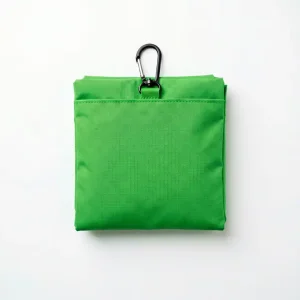
Hand a free or discounted branded tote to customers who forget their bags, so the habit starts on visit one. Selling them at a small margin also turns your bag fee program into a merchandise line. Retailers stocking durable, low-cost options — such as a foldable nylon grocery tote that packs into a pocket or a non-woven foldable travel tote — give customers a convenient fallback that travels with them.
Checkout Scripting and Employee Training
The register is where bag fees live or die. A cashier who sighs, “That’ll be twelve cents for a bag,” trains customers to dread checkout. A cashier who says, “No bag needed today? Great — that saves you the fee,” turns the policy into a win.
The three-script checkout
- Bag needed: “Here’s a reusable tote — that’s a 12¢ bag fee, shown on your receipt.” Matter-of-fact, no apology.
- Customer hesitates: “If you bring your own next time, the fee’s zero — and we can scan a loyalty point for you.”
- Customer brings their own: “Thanks for bringing your bag — that earns you a credit.” Positive reinforcement every time.
Training that sticks
Run a short onboarding module covering the fee amount, the exact script, the loyalty credit, and where to point customers toward affordable grocery bag sets at the counter. Revisit the module whenever a state or local fee changes, and keep a one-page cheat sheet at each register. Role-play the three scripts at least once per new-hire shift.
Make it easy for staff, not just for customers
If the POS makes the fee awkward to apply, cashiers will skip it and create compliance risk. Automate the line item, train the shortcut, and remove any manual override that invites inconsistency.
Handling Common Customer Complaints
Even the smoothest program meets resistance. Prepare your team with concise, non-defensive responses to the four most common objections.
| Customer objection | Recommended response |
|---|---|
| “I’ve never had to pay for a bag here before.” | “The state now requires a 12¢ bag fee — it’s on the receipt. Bring your own and it’s free, and I can add a loyalty credit.” |
| “This is just a money grab.” | “The fee is set by law, not the store. We keep the program customer-friendly — you get a credit for bringing your own bag.” |
| “I didn’t bring a bag and I’m not paying.” | “No problem — we have reusable totes at the counter, or you can carry the items as-is. Which works best?” (Never escalate.) |
| “Your fee is higher than the other store.” | “Ours matches the state minimum. If you ever see a discrepancy, tell a manager and we’ll make it right.” |
De-escalation beats argument. Train cashiers to acknowledge, redirect to the free option, and — when a customer is genuinely upset — to call a manager who has the discretion to waive a single fee in the interest of keeping the visit. One waived fee is cheaper than a lost regular.
Case Data: What the Plastic Bag Fee Retail Numbers Show
Real-world adoption data makes the case for pairing fees with incentives rather than charging in isolation.
- State-level fee impact: Jurisdictions that pair a modest bag fee with a visible reusable alternative consistently report that customers adapt within the first 60–90 days; by the end of year one, a majority of transactions use reusable bags (state fee-rule implementation reporting).
- Retailer incentive lift: Grocers that add a per-bag credit alongside the mandated fee report measurably higher BYOB adoption than fee-only peers — typically a 2–3× lift in reusable-bag use at the register (retailer-reported case data, 2025).
- Repeat-visit effect: Stores that seed the program with a free or discounted tote on the first visit see customers return with that tote on subsequent trips, converting a one-time fee moment into a durable, free-of-charge habit.
“The fee was never the problem. The surprise was the problem. Once we scripted checkout and added a bag credit, complaints dropped to almost zero and our reusable-bag rate tripled within a quarter.” — Regional operations manager, US grocery chain (anonymous, 2025)
For more on which bag types perform best at scale, read our comparison of the best reusable bag options for supermarkets and grocery stores.
Implementation Checklist: Roll Out Without the Drama
Use this checklist to go live in a week, not a quarter.
- Confirm your fee. Verify the exact mandated amount and whether paper/reusable bags are also charged in your state or city.
- Automate the POS. Add the bag fee as an automatic line item; remove manual overrides that invite inconsistency.
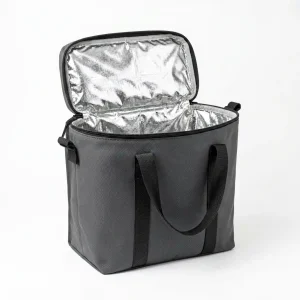
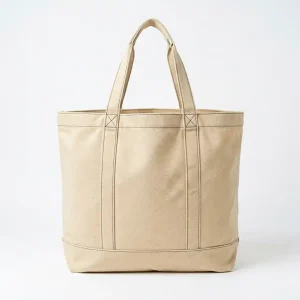
- Order counter inventory. Stock durable totes customers can buy or be gifted at the register — jumbo totes for big shops, foldable travel totes for convenience.
- Set the incentive. Decide your per-bag credit or loyalty reward for customers who bring their own bags.
- Train every cashier. Run the three-script module and role-play the common objections.
- Sign the register. Post a clear, friendly sign explaining the fee and the free alternative.
- Audit receipts. Monthly, spot-check that the fee renders on eligible transactions and incentives post correctly.
- Review and iterate. After 60 days, review complaint logs and adoption data; adjust the incentive or script where friction persists.
Build a Bring Your Own Bag Program That Keeps Customers
A bring your own bag program is more than regulatory compliance — it is a retention tool. Charge the mandated fee cleanly, pair it with a visible reward, script your checkout, and stock a tote worth buying, and customers will come to see the fee as fair and the program as a benefit. Retailers who treat the transition as a customer-experience project, not a tax, protect both their compliance standing and their repeat traffic.
Ready to stock durable, affordable reusable totes for your counters? Browse our full range of wholesale reusable bags, or contact our team for bulk pricing and custom-branded options built for your checkout.