Every trip to the farmers’ market or supermarket checkout has a hidden cost: the flimsy plastic produce bags that tear, trap moisture, and end up in landfill by the end of the day. For zero-waste shoppers who buy heavily — think a family working through 80 apples a week — those single-use bags are a constant source of frustration. For grocers, they’re a recurring expense and a sustainability blind spot customers are quick to notice.
The solution on both sides of the counter is a well-made reusable produce bag. But not all mesh bags are created equal. This guide walks through what actually matters — breathability, tare weight, durability, and checkout performance — so you can pick the right bag whether you’re shopping for your kitchen or buying in bulk for a store.
Mesh vs solid vs cotton: which material wins?
The single biggest decision is the material, because it controls how your produce behaves from the stall to the fridge.
- Mesh produce bags are the default choice for most produce. The open weave lets air circulate, so greens stay crisp and berries don’t sweat inside a sealed pocket. Mesh also gives cashiers a clear line of sight to every item — no digging, no double-bagging, faster checkout. This is why mesh produce bags dominate both home and retail use.
- Solid cotton bags are heavier and less breathable, but they shine for dusty items like potatoes, onions, and root vegetables where airflow matters less and a little light protection helps. They also work well as all-purpose carry bags once the produce is home.
- Solid plastic/TPU bags are best reserved for wet items — washed greens, mushrooms in a damp towel — where you actually want to hold moisture in, not let it out.
For most shoppers, a set of mesh bags covers 90% of weekly needs, with a couple of cotton bags for the root-vegetable drawer.
The tare weight trick, explained
Here’s the friction point at checkout: you fill a bag with 800 grams of apples, but the bag itself weighs 15 grams. Without accounting for it, you pay for the bag too — every single trip.
A tare weight is simply the bag’s own weight printed right on the tag, typically as “TARE: 15g” or “Weight 0.015 kg.” When you hit the scale, the cashier (or self-checkout) keys in that number and subtracts it from the total, so you’re charged only for the produce. Bags sold with tare tags turn a five-minute weigh-in into a five-second one, which is exactly why stores that sell mesh produce bags with tare weight see smoother lines and happier regulars.
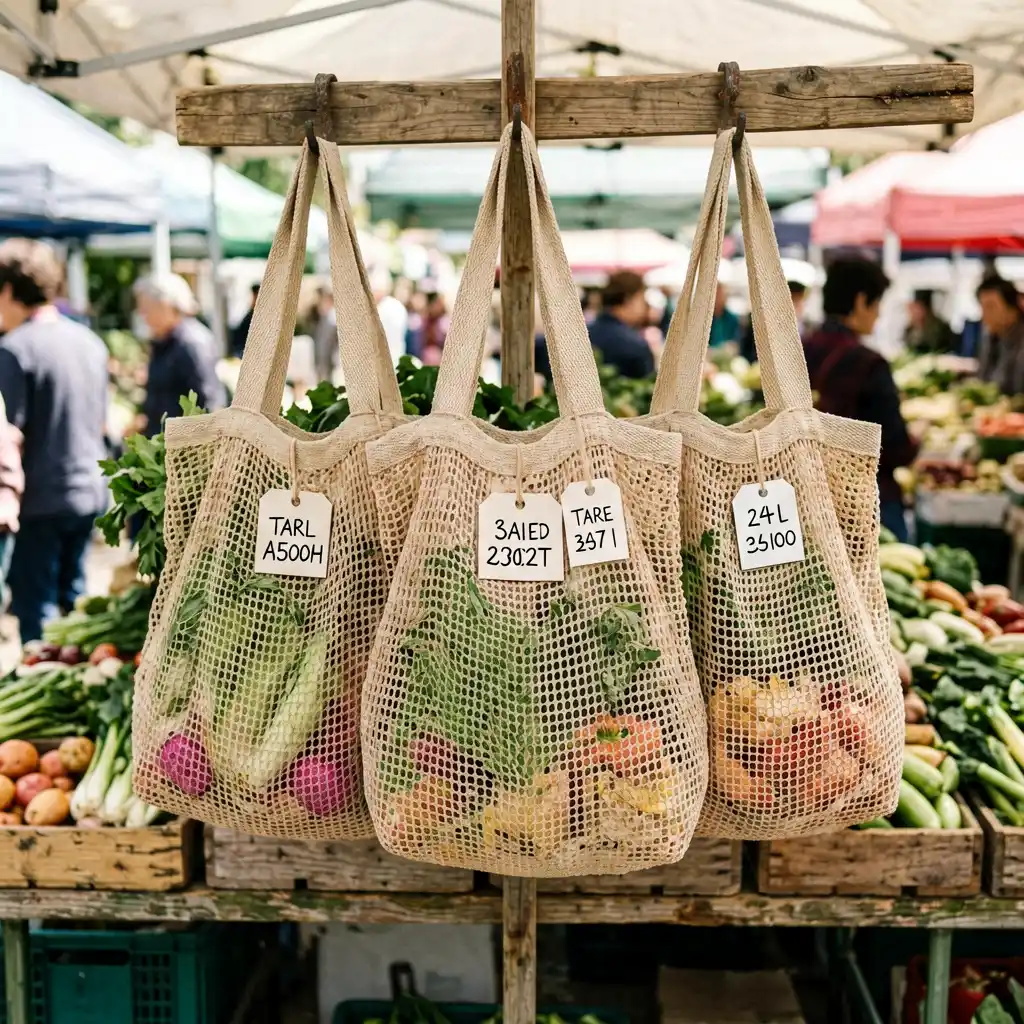
When you’re buying bags, look for tare tags that are printed on a sewn-in label rather than a paper sticker — printed labels survive the wash cycle and dozens of market trips.
What to look for in a good produce bag
Not every mesh bag is built for repeated use. Before you buy, check for these five details:
- Durable drawstring: A reinforced cord with a firm stopper keeps the bag closed on the way to the register and holds its shape over years of use, not weeks.
- The right mesh size: Fine mesh suits berries, nuts, and small tomatoes; a larger weave suits apples, citrus, and leafy bunches. A mixed pack lets you match the bag to the load.
- Washability: Bags that survive machine washing on cold are far more hygienic — and last far longer — than hand-wash-only options.
- Visible, readable tags: Tare tags must stay legible after repeated washing, and the fabric should hold a printed logo cleanly.
- Quantity packs: Buying a 20-pack of produce bags means you always have a clean one on hand and can batch your market trip in one go.
Getting these right is the difference between a bag you use once and a bag that becomes a permanent part of your routine.
For grocers & organic markets buying in bulk
If you run a supermarket, organic grocer, CSA, or produce-focused operation, reusable bags are as much a business decision as a sustainability one. Bulk-buying gives you control over three things single-bag shoppers don’t get:
- Checkout speed: Bags that scan well — open, breathable, with a readable tare tag — keep lines moving and cut the back-and-forth of weighing bags separately.
- Branding: A printed logo turns every customer’s weekly shop into walking advertising. Custom-printed string bags and mesh bags let you reinforce your brand at the register and at home.
- POS-ready design: Bags engineered for retail (consistent tare labels, durable construction, stackable pack sizes) reduce shrink and returns.
For material-level decisions — cotton vs canvas vs jute vs RPET — our material comparison guide breaks down cost, durability, and sustainability trade-offs. And if you’re weighing a full reusable program, this overview of reusable bags for supermarkets and grocery stores covers the operational picture.
Choose a bag that earns its place in the rotation
The best reusable produce bag is the one you actually reach for every week — breathable enough to keep produce fresh, light enough to carry easily, and sturdy enough to outlast hundreds of trips. For shoppers, that means mesh with a real drawstring and a washable tare tag. For grocers, it means bags that move through the POS fast and carry your brand home with every customer.
Ready to stock up for your kitchen or your store? Get wholesale pricing on produce bags — our team will help you match material, mesh size, and branding to your exact operation. Start from our organic cotton muslin produce bags, mesh produce bags, and reusable silicone storage bags. will help you match material, mesh size, and branding to your exact operation.