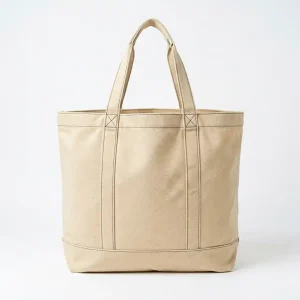
If you shop in bulk — a full Costco run, a case of bottled water, a cartload of groceries headed for delivery — you already know the #1 reusable bag complaint: the bag rips. Handles snap, seams split, and canvas sags until the bottom drags on the ground. It happens because most totes are designed for light loads, not for what a real shopping trip actually weighs.
This guide explains what actually makes a reusable bag heavy-duty — fabric weight, weave, stitch strength, and handle construction — so you can pick a strong grocery bag that survives repeated trips, whether you’re a shopper carrying 40 pounds or a delivery business packing it over and over.
What makes a bag heavy-duty
Four factors determine whether a tote can take a heavy load without failing:
- Fabric weight (gsm). Grams per square meter tells you how dense the material is. Light promotional totes run 80–120 gsm; heavy-duty bags start around 200 gsm and go higher. Thicker fabric resists tearing and punctures.
- Woven vs non-woven. Woven fabric (cotton, canvas, woven polypropylene) is made from interlocking yarns and holds shape under weight. Non-woven PP is cheaper but can stretch and tear at stress points with heavy loads.
- Stitch strength. Reinforced double or boxed stitching at the seams — especially where the base meets the sides — is what keeps a heavy bag from splitting open.
- Load-tested capacity. A real heavy-duty bag is tested to a stated weight. Look for a rated capacity rather than vague “durable” claims.
Material picks for heavy loads
The material you choose should match how heavy the bag will get. Strong candidates include:
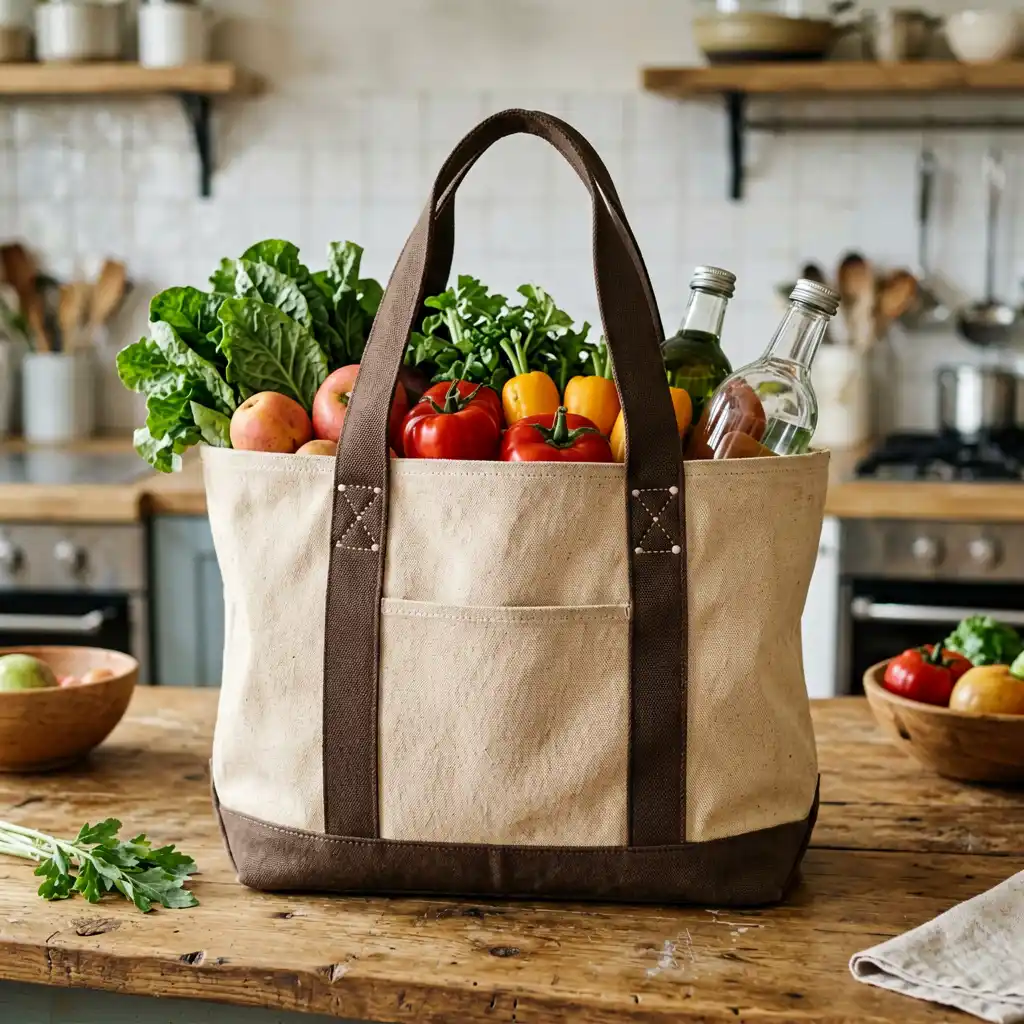
- Heavy cotton or canvas. Dense, breathable, and naturally strong. Great for shoppers who want a bag that holds its shape for years.
- Woven polypropylene (PP). Lightweight, water-resistant, and very strong — a top pick for high-load retail and delivery use. If you stock these for your store, our reusable grocery bags page covers the options and custom sizes.
- RPET with a reinforced base. Recycled polyester bags are eco-friendly and can be built with a doubled base panel to handle heavy groceries without sagging.
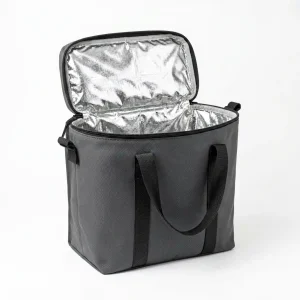
- Insulated or thermal options. For cold and frozen items, an insulated tote keeps food at temperature while still carrying a heavy load — covered more below.
Handles matter most
Most bag failures happen at the handle, not the bag body. When you load a tote with bottles and cans, all that weight pulls on two narrow straps. Look for:
- Reinforced attachment points. Handles that are sewn deeply into the bag or run the full length of the side distribute weight better than small loops stitched at the rim.
- Comfortable grips. Wider, padded, or rounded handles cut into your hands less on a heavy trip.
- Cross-body or long handles. Long handles let you carry the bag over your shoulder, which balances the load and spares your fingers — a big plus for heavy deliveries.
For grocery delivery & meal kits
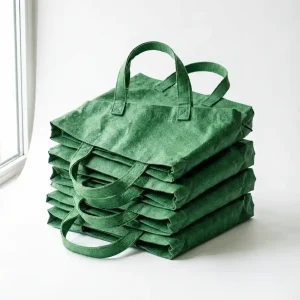
Grocery-delivery and meal-kit operators have different needs than individual shoppers. Their bags must survive repeated trips, stack neatly in a delivery run, and stay food-safe. Insulated and thermal bags keep cold and frozen items stable during transit, while stackable flat-bottom designs pack a vehicle efficiently.
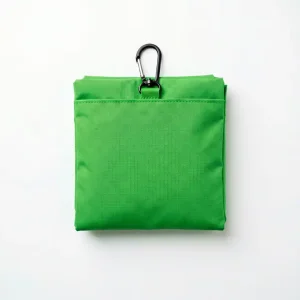
If part of your load is produce, pair a heavy tote with reusable produce bags to keep fruit and vegetables organized and ventilated. For lightweight bulky items — bakery, bread, and soft goods — a mesh string bag stretches to fit without adding weight.
Load capacity you can expect
A well-made heavy-duty bag typically carries 40–60 lb (18–27 kg), and premium reinforced models can be rated higher. To verify a claim:
- Check that the manufacturer lists a tested capacity, not just marketing language.
- Look for reinforced handles and box-stitched seams at the rating’s load point.
- For repeated heavy use, choose woven fabric and a reinforced base rather than a thin non-woven tote.
Retailers stocking bags for their own customers often find that offering a genuinely strong option reduces returns and complaints — a point we cover in depth in our guide to reusable bags for supermarkets and grocery stores.
Choosing the right bag for your trip
Match the bag to the job. For everyday errands and lighter loads, a standard tote is fine. For heavy bulk trips, choose a woven or canvas bag rated at your load. And if you travel with groceries — or carry bags on the move — you may want a packable option; see our roundup of best reusable bags for travel for ideas.
Whatever you choose, inspect the seams and handles before you buy. A heavy-duty reusable bag is an investment that pays off in fewer torn bags and fewer broken handles.
Tell us your max load — match it to the right build using our size & capacity guide before you buy. — match it to the right build: our jumbo 60lb grocery tote, 100gsm heavy-duty non-woven bag, and woven PP heavy-duty tote cover most hauling needs. — contact our team and we’ll recommend a bag built to handle it, in the size, material, and custom branding you need. For cost modeling, see total landed cost and material comparison. a bag built to handle it, in the size, material, and custom branding you need.