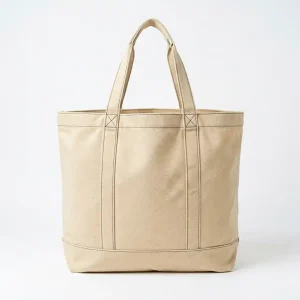
You know custom branded bags would elevate your business. You have seen competitors with beautiful custom totes at trade shows and retail counters. But the minimum order quantities (MOQs) — often 1,000+ bags — feel daunting for a small business or first-time buyer.
“What if I order 1,000 bags and they don’t sell?” This is the #1 fear holding back small and mid-sized businesses from investing in custom packaging.
The good news: there are proven strategies to start with smaller quantities, minimize risk, and scale up as demand grows. This guide shows you how.
Strategy 1: Start with Stock Bags + Custom Printing
The lowest-risk approach is to choose a standard bag style (already in production) and add your custom print. Since the bag itself does not require custom tooling or material sourcing, MOQs for printing alone start much lower — often 200–300 pieces instead of 1,000+.
Best for: First-time buyers, seasonal promotions, event giveaways
Typical MOQ: 200–500 pcs
Example: Our custom drawstring bags start at 200 pcs with logo print — perfect for corporate events and small retail launches.
Strategy 2: Test the Market with Samples Before Committing
Before placing your first bulk order, invest in a production sample. This is not a generic stock sample — it is a sample made with YOUR design, your chosen material, and your print method.
A production sample ($30–$80) lets you:
- ✅ Evaluate print quality and color accuracy
- ✅ Test bag durability and stitching
- ✅ Show the bag to your team or customers for feedback
- ✅ Confirm sizing and usability
ROI: One production sample can prevent a $5,000 mistake. Request a production sample →
Strategy 3: Use a Phased Ordering Approach
Instead of committing to your target volume immediately, break your order into phases:
| Phase | Quantity | Purpose |
|---|---|---|
| Phase 1: Pilot | 200–500 bags | Test the product in real market conditions. Distribute to your best customers or at a single event. |
| Phase 2: Evaluate | 2–4 weeks | Gather feedback. Measure reorder requests. Check for any quality issues. |
| Phase 3: Scale | 1,000–5,000 | Full production based on real demand data, not guesswork. |
Benefit: By Phase 3, you know exactly what sells, what doesn’t, and what improvements to make. Your second order will be more efficient than the first.
Strategy 4: Share Inventory with Partners
Can’t meet the MOQ alone? Split the order with a complementary business:
- A winery and a cheese shop — co-branded bags for a local food trail
- A gym and a supplement brand — shared drawstring bag order
- A co-working space and a coffee roaster — joint branded tote bags
- Multiple retail stores in the same mall — bulk order with shared base cost, individual store prints
Many suppliers can produce one base bag with different prints for different end customers. Ask about “co-packing” or “mixed print” options.
Strategy 5: Choose Higher-Value Bag Types Per Piece
If the MOQ per style is 500, instead of ordering 500 cheap bags, consider ordering 300 premium bags. A better-quality bag commands a higher perceived value and can be sold at a higher retail price — offsetting the smaller quantity.
Popular high-value options:
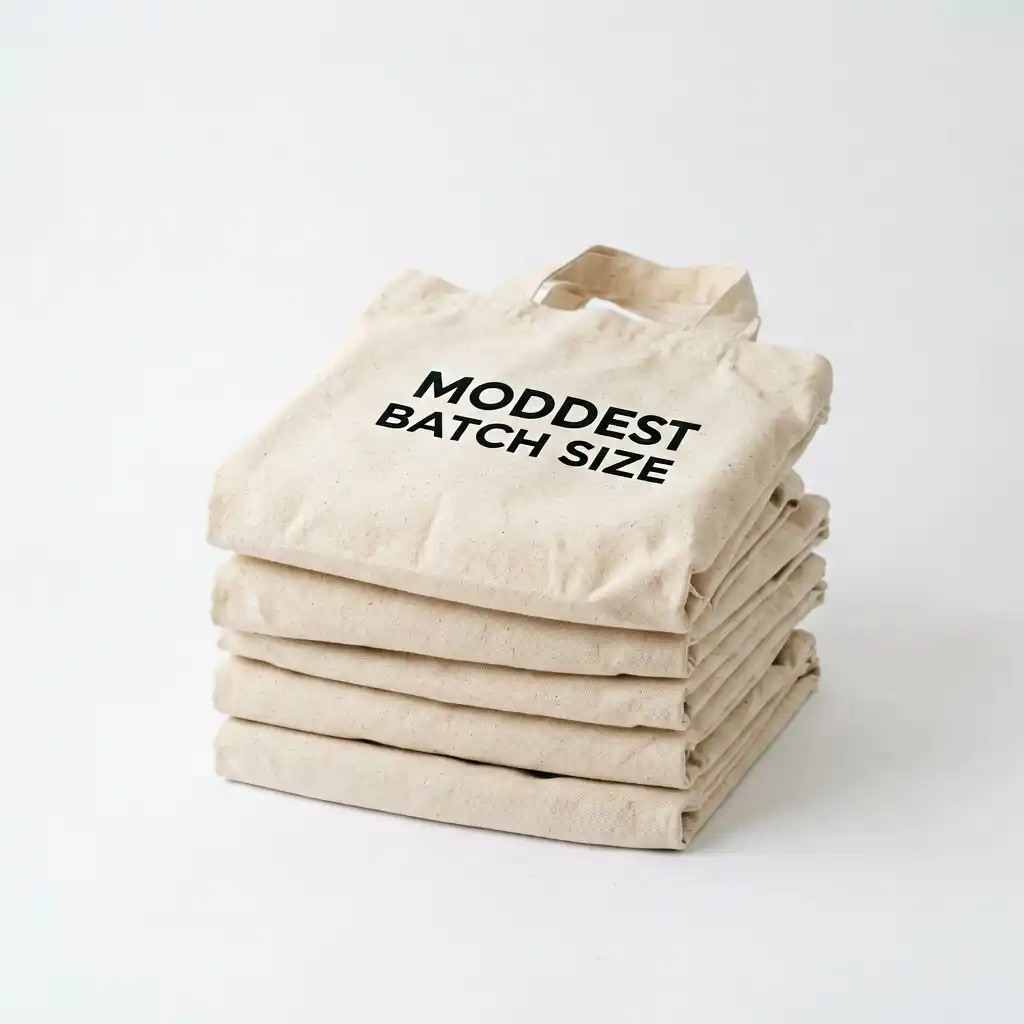
- Premium organic cotton totes with jumbo handles
- Heavyweight non-woven bags with reinforced stitching
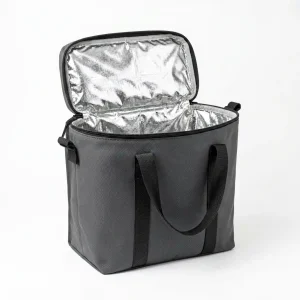
- Insulated thermal grocery bags for premium retail
FAQ: Small MOQ Questions Answered
What is the absolute minimum I can order?
For stock bags with print: 200–300 pcs. For fully custom bags (custom size, material, shape): 500–1,000 pcs depending on complexity.
Can I mix colors and designs within one order to meet MOQ?
Yes — most suppliers allow you to mix colors and designs as long as the bag type and print method are the same. Each SKU might have its own MOQ of 50–100 pcs.
What if I only need 100 bags?
Some suppliers offer small-batch DTG (Direct-to-Garment) or digital transfer printing for orders as small as 50–100 pcs. Costs are higher per unit ($3–$8/pc), but no long-term commitment required.
Is there a penalty for reordering a different design later?
No. Once you establish a relationship with a supplier, subsequent orders are faster and often cheaper. Tooling costs for new designs may apply, but the setup process is streamlined.
Summary: Key Takeaways
- ✅ Start with stock bags + print (MOQ 200–300 pcs) to minimize risk
- ✅ Always order a production sample before mass production
- ✅ Use phased ordering — pilot → evaluate → scale
- ✅ Partner with complementary businesses to share MOQ
- ✅ Higher-value bags = smaller quantities, better margins
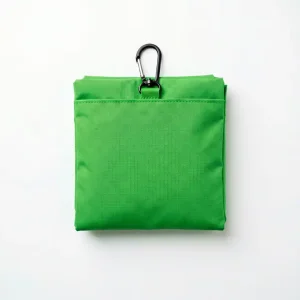
Ready to place your first small-batch order? Good low-MOQ starters: custom logo cotton totes, foldable pocket totes, and mini organza drawstring pouches. Talk to our team — we help first-time buyers start small and grow confidently. See also our production timeline guide and supplier vetting checklist. start small and grow confidently.