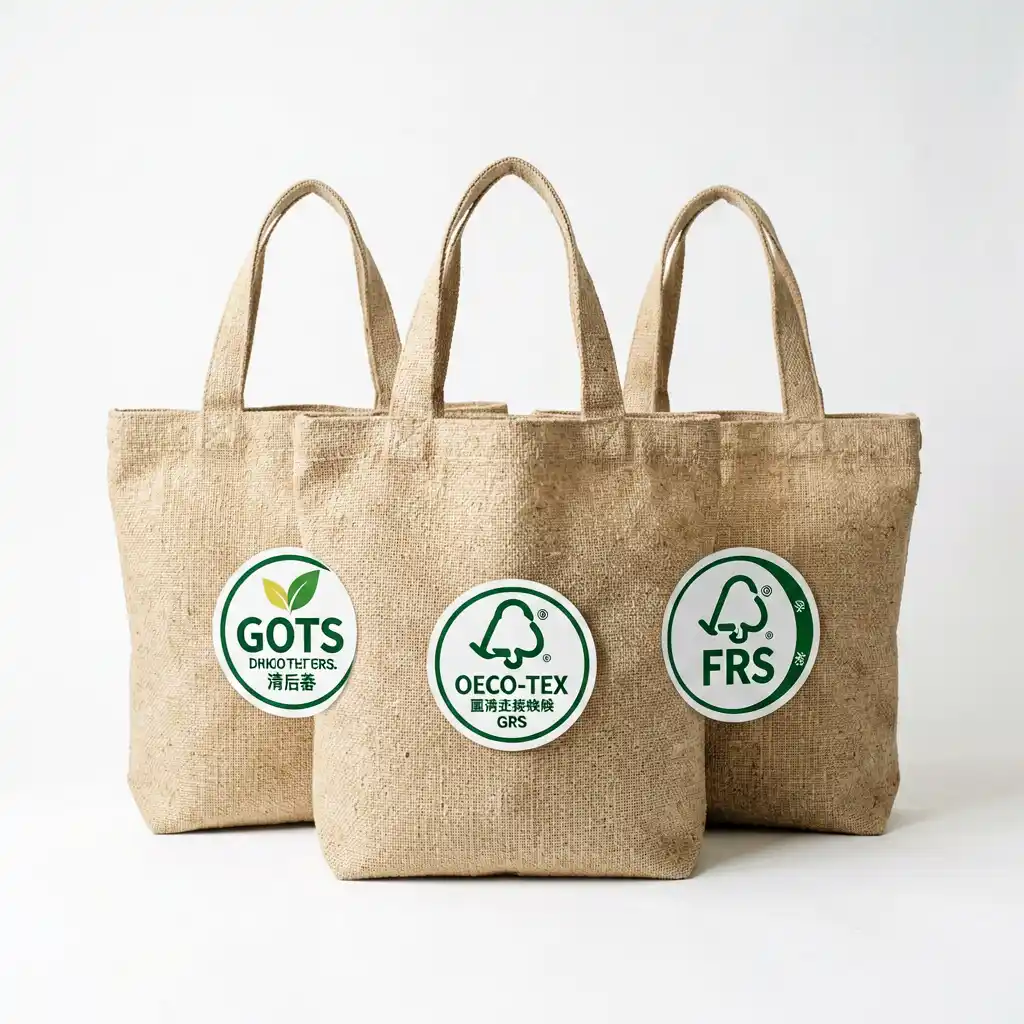
In today’s market, claiming your bags are “eco-friendly” is no longer enough. Buyers — especially B2B procurement teams — are increasingly demanding verifiable certifications to back up sustainability claims.
But with acronyms like GOTS, OEKO-TEX, FSC, GRS, and Cradle to Cradle flying around, it is easy to get confused. Which ones actually matter? Which certifications should you look for when sourcing reusable bags? And how do you verify that a supplier’s claims are real?
This guide breaks down every major eco-certification relevant to reusable bags — what they cover, who issues them, and why they matter for your brand.
GOTS (Global Organic Textile Standard)
| What it certifies | Organic fiber content and ethical production of textile products |
| Relevant for | Organic cotton tote bags, canvas bags |
| Levels | “Organic” (95%+ organic fibers) or “Made with Organic” (70%+) |
| Key requirement | Entire supply chain — from farm to finished bag — must be certified organic. Chemical inputs, wastewater treatment, and worker conditions are all audited. |
Takeaway: If you are sourcing organic cotton bags for a premium brand (organic food stores, eco-conscious retailers), GOTS certification is the gold standard. Browse our GOTS-certified cotton tote bags →
OEKO-TEX Standard 100
| What it certifies | Textile products free from harmful substances |
| Relevant for | All reusable bag materials: cotton, non-woven RPET, polyester, nylon |
| Key requirement | Testing for over 350 regulated and non-regulated substances including heavy metals, pesticides, formaldehyde, and phthalates |
Takeaway: OEKO-TEX is the most common certification for reusable bags. It does not mean the product is organic — it means it is chemically safe. Essential for bags that will contact food (produce bags, grocery bags).
FSC (Forest Stewardship Council)
| What it certifies | Paper and wood-based products from responsibly managed forests |
| Relevant for | Paper bags, kraft paper bags, boxes, and packaging |
| Label types | FSC 100% (all from FSC forests), FSC Recycled (100% recycled), FSC Mix (combination) |
Takeaway: If your business needs retail paper bags (boutiques, bakeries, wine shops), look for FSC-certified paper. View FSC-certified paper bags →
GRS (Global Recycled Standard)
| What it certifies | Recycled content and responsible production practices |
| Relevant for | RPET (recycled polyester) bags, recycled cotton, recycled non-woven materials |
| Key requirement | Verification of recycled input materials, chain of custody tracking, and social/environmental criteria in production |
Takeaway: GRS is critical for RPET bags. It proves your “made from recycled bottles” claim is backed by audited supply chain data. See our GRS-certified RPET bags →
How to Verify a Supplier’s Certifications
Greenwashing is real. Here is how to protect your brand:
- Ask for the certificate number — every certification has a unique ID. Look it up in the certifying body’s public database.
- Check the scope — some suppliers have a certificate for one product line but apply it to all products.
- Request batch-level documentation — for GRS, ask for the Transaction Certificate (TC) that traces recycled content from source to finished bag.
- Visit the factory (or request a virtual audit) — legitimate certified suppliers welcome audits.
Which Certification Do You Need?
| Your Industry | Recommended Certification |
|---|---|
| Organic grocery / health food store | GOTS (cotton bags), OEKO-TEX (all bags) |
| Winery / liquor store | FSC (paper wine bags), OEKO-TEX (fabric wine totes) |
| Retail / fashion boutique | GOTS (premium totes), GRS (RPET bags), FSC (paper bags) |
| Supermarket / grocery chain | OEKO-TEX (standard), GRS (recycled options) |
| Restaurant / takeout | FSC (paper carryout bags), OEKO-TEX (reusable bags) |
| Corporate gift / promo | GRS (RPET), OEKO-TEX |
Summary: Key Takeaways
- GOTS = organic fiber, OEKO-TEX = chemical safety, FSC = responsible forestry, GRS = recycled content
- Always verify certificate numbers through the issuing body’s public database
- The right certification depends on your industry and the bag material
- Multiple certifications on one product is a strong signal of genuine commitment
Ready to source certified eco-friendly bags? Contact Y Eco Bag — we will match you with the right certified materials for your business needs. For background, see our material comparison and landed-cost guide. with the right certified materials for your business needs.