Why Insulated Reusable Bags Are a Separate Category
A standard tote keeps items together; an insulated bag keeps them safe. The difference is a thermal lining — foil or neoprene — that slows heat transfer so cold food stays cold and hot food stays hot for hours. For grocery, meal-prep, and delivery businesses this is not a nice-to-have; it is a food-safety requirement. This guide covers how insulated cooler bags work, which lining to choose, and how to match capacity to the trip.
How the Thermal Lining Works
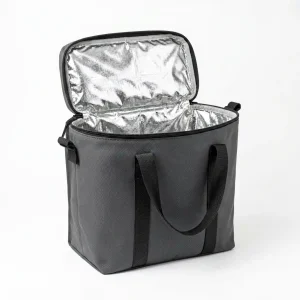
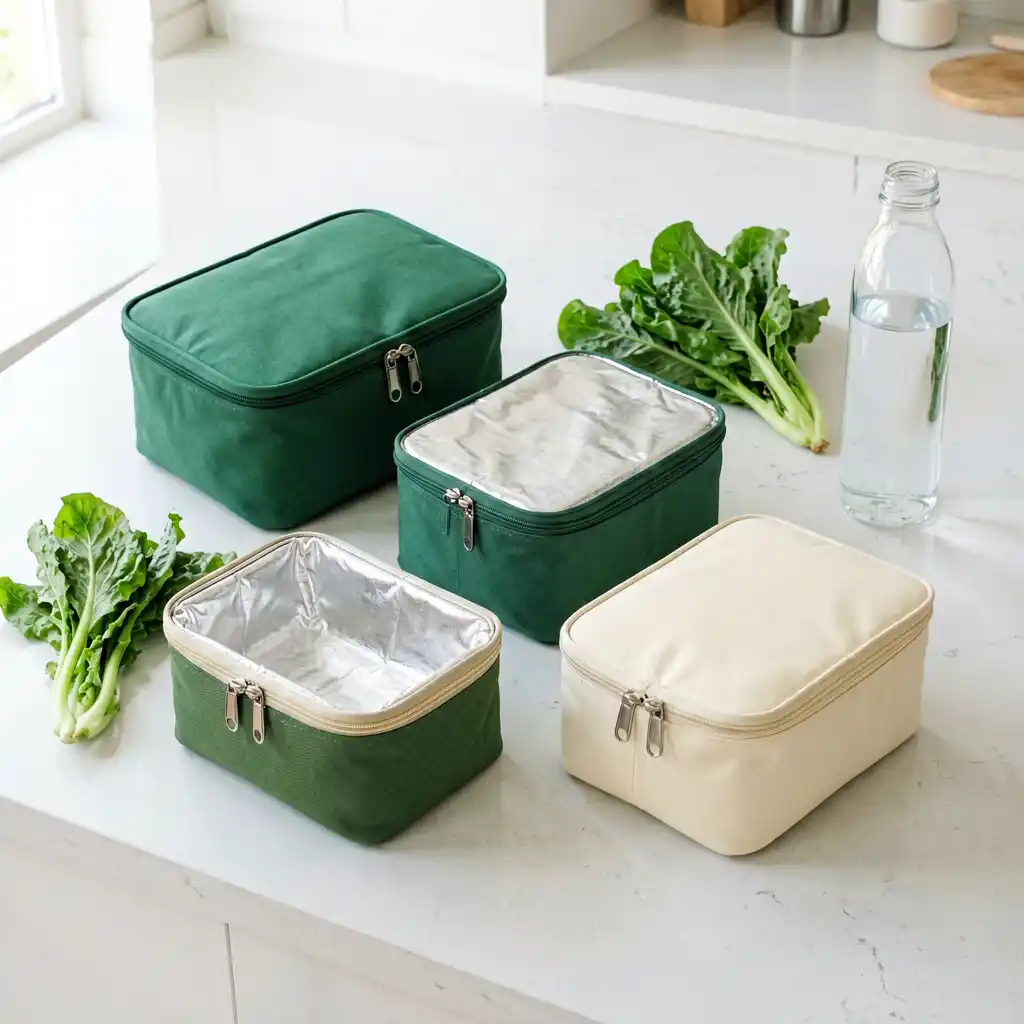
Two materials dominate. Neoprene is a flexible synthetic rubber that insulates like a wetsuit; it is machine-washable and cushions bottles. Foil (aluminized film) reflects radiant heat and is lighter, but it is spot-clean only and less padded. Both rely on trapped air, so a closed zipper matters more than thickness — an open-top bag loses temperature in minutes.
Insulated Lunch & Grocery Bags
For daily lunch, an insulated lunch tote with neoprene lining holds temperature two to four hours, enough for a commute and a desk. For the weekly shop, a zipper insulated grocery cooler scales up to a full cart, and an insulated thermal grocery tote bridges the two for shorter runs.
Material Comparison Table
| Bag | Lining | Holds Temp | Best For |
|---|---|---|---|
| Insulated lunch tote | Neoprene | 2–4 hrs | Daily lunch |
| Insulated grocery cooler | Foil zip | 3–5 hrs | Weekly shop |
| Insulated thermal tote | Foil/neoprene | 2–4 hrs | Short grocery run |
Use Cases: Grocery, Meal Prep, Delivery
- Grocery — a foil-zip cooler cuts food-safety risk on the ride home; pre-chill and add a gel pack for summer.
- Meal prep — neoprene lunch totes keep three meals safe from kitchen to office.
- Delivery — insulated carriers protect perishables in the last mile where a plain tote fails.
For food-contact safety specifically, see our guide to reusable bags for restaurants and takeout and the paper vs reusable comparison.
Temperature Math: How Long Is Long Enough?
A neoprene sleeve buys 60–90 minutes; a foil-zip cooler with an ice pack extends to half a day. The starting temperature matters most — pre-chill the bag and the food, and you add hours of safe transit. For grocery runs in summer, this is the difference between safe chicken and a refund.
Custom & Bulk Options
Businesses can print logos on the exterior (never the lining) and order by the hundred. For printing methods, read our tote bag printing methods guide; for volume pricing, our bulk pricing guide.
Care & Longevity
Neoprene is machine-washable on the top rack; foil linings wipe clean and must dry fully to avoid mildew. Never machine-wash a foil bag. For full washing guidance across materials, see how to wash reusable bags.
Conclusion
If your contents are food, an insulated bag is the right tool — not a fashion tote. Browse our insulated range or contact our team for custom bulk insulated bags.