California’s plastic bag ban 2026 is the most consequential single-use packaging law change American retailers have faced in a decade. What began in 2014 as SB 270 — a 10-cent charge on carryout bags — has now closed its final loophole. As of January 1, 2026, the sale of all plastic film carryout bags at checkout is banned statewide, including the thick “reusable” plastic bags many grocers sold for years. For grocery stores, convenience stores, liquor stores, pharmacies, and food markets across the state, the question is no longer whether to switch — it’s how fast and how compliantly. This retailer compliance checklist lays out exactly what’s banned, what’s exempt, what the fines are, and which bag options you can stock without risk.
What the California Plastic Bag Ban 2026 Actually Bans
The legal framework is a pair of complementary statutes. The original SB 270 prohibited single-use plastic carryout bags at covered stores. Then SB 1053 (Blakespear, Chapter 453, Statutes of 2024) dismantled the so-called “reusable” plastic film bag loophole, which had let stores keep handing out thin plastic bags as long as they were labeled reusable and priced at 10 cents. Under SB 1053, those plastic film bags can no longer be offered to customers at all from January 1, 2026 onward.
CalRecycle, the state agency that administered the program, notes on its Single-Use Carryout Bag Ban page that “until January 1, 2026, these stores may sell reusable plastic bags made with recycled content or recycled paper bags” — and that the sale of plastic film carryout bags ends entirely on that date.
Who Is a Covered Store?
The ban applies to every store that must comply with the statewide law, regardless of local jurisdiction. Covered stores include:
- Full-line, self-service retail stores with gross annual sales of at least $2 million that sell dry groceries, canned goods, or nonfood items plus some perishables.
- Large retail stores with a pharmacy of at least 10,000 square feet that generate sales or use tax.
- Convenience stores, food marts, and liquor stores that sell a limited line of goods and hold a Type 20 or Type 21 license from the Department of Alcoholic Beverage Control.
If your store is in a city or county with its own stricter bag ordinance, you must meet both the state and the local requirements. CalRecycle explicitly recommends verifying with your local governing authority whether a stricter local ordinance applies.
Exemptions: Bags That Are Still Allowed
The California plastic bag ban 2026 is sweeping, but it is not a ban on every plastic bag. A number of narrow, purpose-built exemptions remain in force. You can continue to use the following without restriction:
- Pharmacy prescription bags used to protect prescriptions for customers.
- Handle-less protective bags used to protect a purchased item from damage or contamination.
- Food safety bags used to contain unwrapped food items, such as bulk produce and bakery goods, at the point of sale.
- Dry cleaning bags — handle-less bags designed to slip over garments on a hanger.
These exemptions matter for compliance planning: produce and bulk-food bags remain legal, which means you do not need to source alternatives for the self-service produce aisle — only for the items customers bag at checkout.
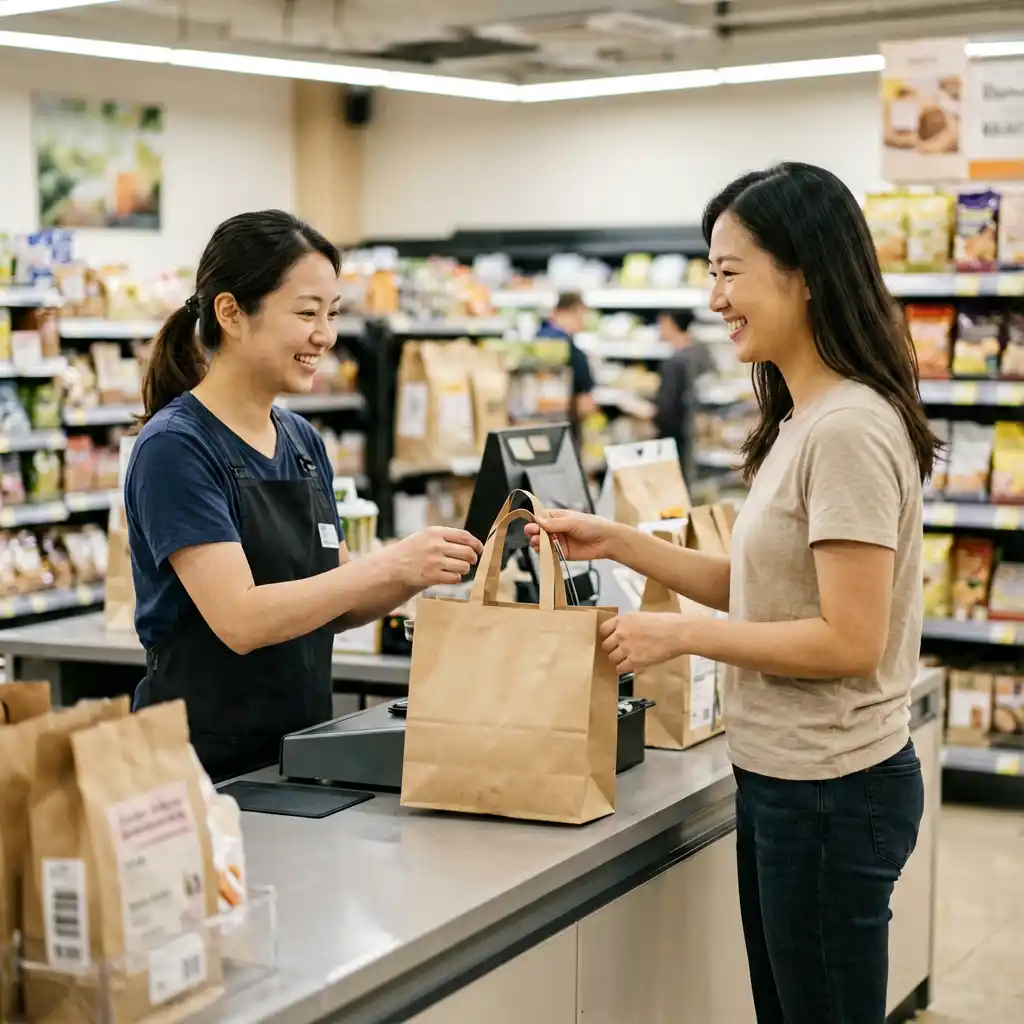
The Recycled Paper Bag Standard
Recycled paper bags remain fully legal under the ban, but they must meet a strict material standard. Under CalRecycle requirements, compliant recycled paper bags must:
- Contain at least 40% postconsumer recycled material if rated above eight pounds, or 20% if rated at eight pounds or smaller.
- Be accepted for recycling in curbside programs in most California households.
- Be printed with the manufacturer’s name, the country of manufacture, and the minimum percentage of postconsumer content.
This is a useful procurement checklist item: if your paper bag supplier can’t document recycled content and print it on the bag, that bag is not compliant.
Fines and Penalties for Non-Compliance
Enforcement in California is aggressive and escalating. CalRecycle publishes a clear penalty schedule for stores or reusable-bag producers that violate the single-use carryout bag ban:
| Violation | Fine Per Day |
|---|---|
| First violation | $1,000 |
| Second violation | $2,000 |
| Third and subsequent violations | $5,000 |
Note that these fines are assessed per day. A store that keeps a roll of plastic film bags behind the counter for a full month after the ban could face a cumulative exposure of tens of thousands of dollars. That makes compliance a financial necessity, not a green-credential nicety.
It is also worth knowing who enforces the law. CalRecycle does not have enforcement authority over the carryout bag ban. Instead, enforcement is carried out by cities, counties, and the California Office of the Attorney General. Consumers can report violations directly to the Attorney General’s online reporting form or to the local District Attorney, City Attorney, or City Prosecutor’s office where the violation occurred. In practice, this means both regulators and the public can trigger inspections, so a visible roll of plastic bags at your register is a genuine liability.
California Plastic Bag Ban 2026: Implementation Timeline
Understanding the timeline helps you anticipate what comes next and communicate clearly with staff and customers:
| Date | Milestone |
|---|---|
| 2014 | SB 270 signed; single-use plastic carryout bags banned at covered stores, 10-cent minimum charge for reusable/paper bags. |
| 2016 | Proposition 67 upholds SB 270 at the ballot box. |
| 2024 | SB 1053 signed, closing the “reusable” plastic film bag loophole. |
| Jan 1, 2025 | Reusable plastic film bags lose their exemption in qualifying jurisdictions; transition begins. |
| Jan 1, 2026 | Total ban on plastic film carryout bags statewide takes effect. Only recycled paper bags and certified reusable bags may be sold. |
Because the phase-in has been public and long-anticipated, enforcement agencies are treating January 1, 2026, as a hard deadline rather than a soft target. Retailers should assume inspectors are checking from day one.
Retailer Compliance Checklist: Stocking Compliant Bags
If you’re a California retailer, run this checklist before your next supplier order. Each line is a concrete action you can take today:
- Remove all plastic film carryout bags from the register, including “reusable” 2.25-mil or thicker bags. These are no longer sellable to customers.
- Verify your paper bag supplier’s recycled content. Confirm the bag meets the 40% (over 8 lb rating) or 20% (8 lb or under) postconsumer threshold and is printed with manufacturer name, country, and recycled-content percentage.
- Source certified reusable bags if you intend to sell them. They must have a handle, be designed for at least 125 uses, hold at least 15 liters (about 4 gallons), and be machine washable or cleanable. The bag must be printed with the manufacturer’s name and country and a “designed for at least 125 uses” statement.
- Check certification currency. Reusable bag producers must resubmit proof of certification to CalRecycle every two years. Ask your supplier for a current certificate before placing your order.
- Charge at least 10 cents for every compliant bag you sell — and keep that revenue for bag-related costs, compliance, and educational materials, per the law.
- Give bags free to WIC and EBT customers. The law requires stores to provide a reusable or recycled paper bag free of charge to customers paying with WIC or EBT.
- Keep produce and bulk-food bags available — the food-safety exemption means your produce aisle stays stocked with handle-less produce bags.
- Train checkout staff so no one hands out a plastic bag out of habit during the first busy weeks of the year.
- Post a brief customer notice explaining the switch; it reduces friction and complaint volume at the register.
Compliant Replacement Bag Options for California Retailers
Once you’ve cleared the old plastic film stock, the question becomes what to put in its place. For California retailers, three categories cover nearly every checkout scenario, and each is available in bulk from a bag manufacturer that documents compliance.
1. Recycled Paper Shopping Bags
Recycled paper bags are the closest drop-in replacement for checkout. They meet the recycled-content thresholds, are accepted in curbside recycling, and carry the required printed disclosures. For a fast switch with minimal customer resistance, a post-consumer recycled paper bag keeps the familiar paper silhouette while satisfying the state standard. Where you need a sturdier, premium presentation — delis, bakeries, boutique retail — a kraft SOS flat-handle paper bag offers the same compliance with a heavier, more premium feel.
2. Non-Woven Reusable Tote Bags
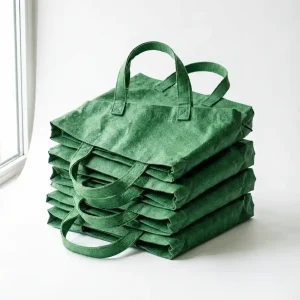
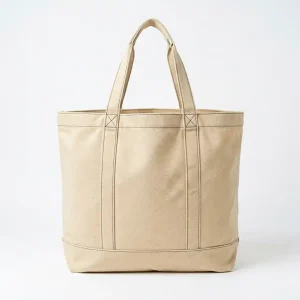
Non-woven polypropylene (PP) tote bags are the workhorse of the reusable-bag market in California. They clear the 125-use design requirement, hold far more than 15 liters, are washable, and can be printed with the manufacturer’s details and reuse statement required by law. For grocers that want a durable bag customers will actually reuse, a non-woven reusable shopping bag at 80 gsm balances sturdiness with a cost that still works for a 10-cent-plus sale. Many retailers sell these at a small markup as a revenue-neutral, compliant checkout option.
3. Multi-Purpose Reusable Bag Sets
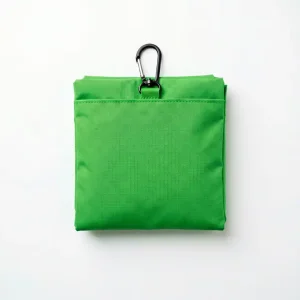
For convenience stores, pharmacies, and specialty retailers where checkout volume is lower, offering a grocery bag set of assorted reusable totes gives customers a tangible, value-priced reason to buy rather than walk out empty-handed. Because these sets are designed for repeated use, they help your store meet the letter of the law while nudging customer behavior toward reuse — which is precisely the outcome the statute intends.
Procurement tip: whichever bag you choose, request the manufacturer’s certification documentation before ordering. For reusable bags that means current third-party certification (renewed every two years); for paper bags it means a written recycled-content spec. Documenting this now protects you if a distributor, city, or the Attorney General ever asks.
Common Compliance Mistakes to Avoid
Even well-intentioned retailers trip up in predictable ways. Watch for these common scenarios:
- Hoarding old stock. The most common mistake is finishing out a warehouse of plastic “reusable” bags after the deadline. The exemption for plastic film ends January 1, 2026 — you cannot sell or give away that stock afterward.
- Assuming all “recycled” bags qualify. A bag labeled “recycled” that doesn’t hit the printed content threshold or lacks the required labeling is non-compliant even if it looks green.
- Forgetting the 10-cent minimum. You may charge at least 10 cents per bag, but you may not give compliant bags away for free to the general public — only WIC/EBT customers get free bags.
- Misreading the produce exemption. The produce/bulk-food exemption covers handle-less bags inside the store for unwrapped food. It does not authorize a checkout roll of plastic bags.
- Relying on a single supplier with no backup. If your main bag supplier has a compliance gap or a stock shortage in the post-ban rush, a second qualified supplier prevents an unstocked register.
Beyond the Deadline: What Good Compliance Looks Like
The California plastic bag ban 2026 is the clearest signal yet that reusable and recycled-paper bags are the future of checkout packaging nationwide. Retailers that switch early don’t just avoid fines — they future-proof their supply chain against the next round of bans in other states and lock in the volume pricing and supplier relationships that laggards will lose.
For a deeper look at how the ban fits into the national picture and which states are next, read our guide to plastic bag bans across the US in 2026. And if you’re still weighing which alternative works for your store, our comparison of the best retail bag alternatives walks through the cost, durability, and compliance trade-offs of each material.
California’s total plastic bag ban is now law. The retailers who treat it as a business decision — not a compliance chore — are the ones who will keep customers happy and registers running through 2026 and beyond.
Ready to switch? Explore our full range of compliant recycled paper and reusable bag options, or contact our team for bulk pricing, certification documentation, and help choosing the right bag for your store.